



Your Nervous System Is Not Broken—It's Trying to Protect You
Home Our Blog Your Nervous System Is Not Broken—It's Trying to Protect YouSearch Post

If You Need Any Help
Contact With Us
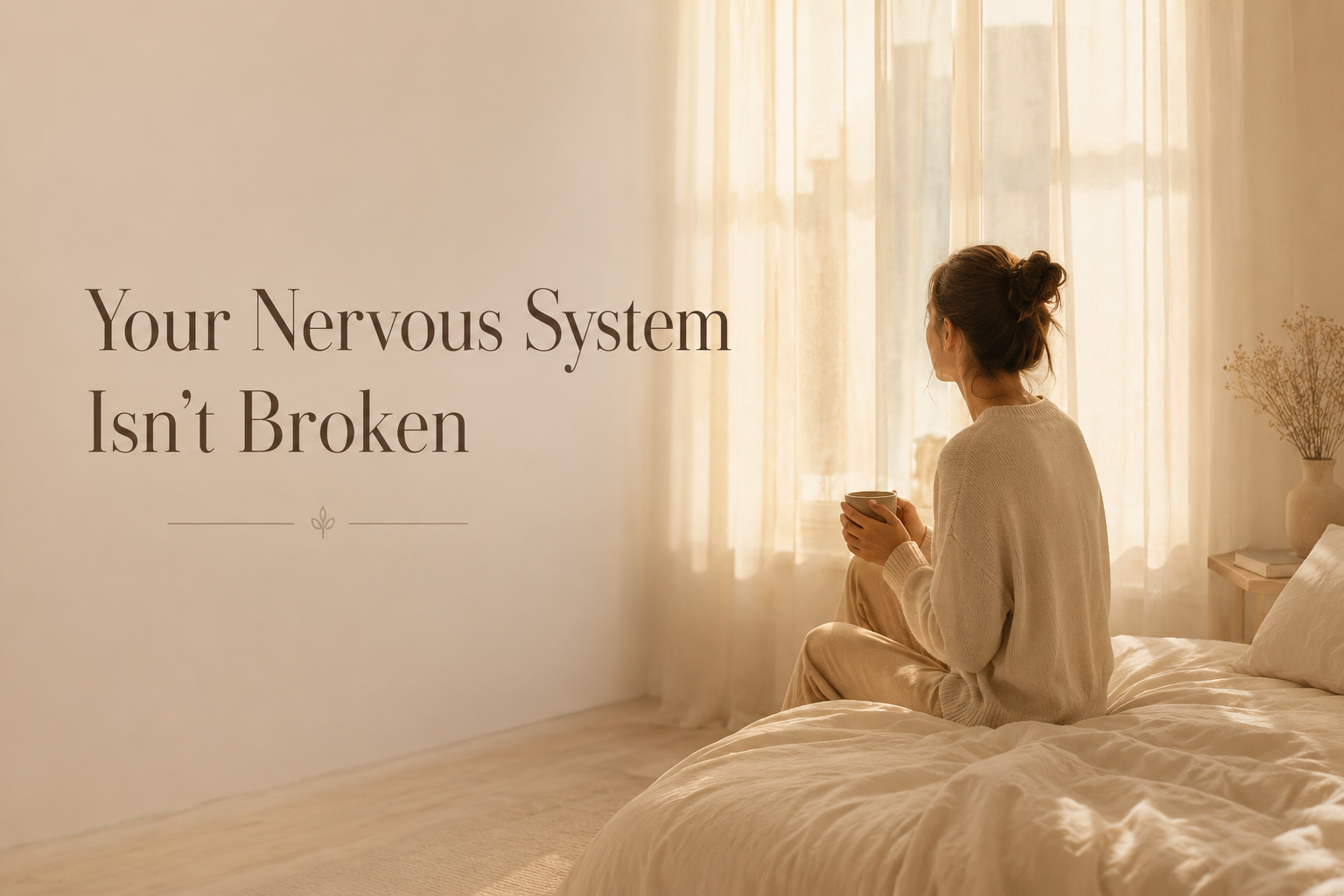
Have you ever wondered why your heart races before an important conversation? Why a small comment from someone stays in your mind for hours? Or why you feel exhausted even after doing "nothing"?
Many people assume something is wrong with them when they experience anxiety, overwhelm, emotional numbness, or constant stress.
But what if your nervous system isn't working against you?
What if it's doing exactly what it was designed to do?
Understanding Your Nervous System
Your nervous system is your body's communication network. It constantly scans your surroundings, your thoughts, and even your memories to answer one important question:
"Am I safe?"
If the answer is yes, your body relaxes. Your breathing slows, your muscles soften, your mind becomes clearer, and you naturally feel more present.
If the answer is no—even if there isn't any immediate danger—your body prepares to protect you.
This is not a flaw.
It is one of the most intelligent survival systems you have.
Why We Feel Stuck in Survival Mode
Our ancestors needed their nervous systems to react quickly to physical threats.
Today, the dangers have changed.
Instead of wild animals, our nervous system may react to:
-
Constant work pressure
-
Financial worries
-
Relationship conflicts
-
Fear of failure
-
Unresolved emotional pain
-
Negative self-talk
-
Information overload from social media
Over time, the nervous system may begin treating everyday situations as threats.
This can leave you feeling like you're always "on edge," even when nothing dangerous is happening.
Signs Your Nervous System May Be Overloaded
Everyone experiences stress differently, but some common signs include:
-
Feeling anxious without knowing why
-
Difficulty relaxing
-
Constant overthinking
-
Trouble sleeping
-
Feeling emotionally numb
-
Irritability or sudden emotional reactions
-
Fatigue that doesn't improve with rest
-
Feeling disconnected from yourself
These are not signs of weakness.
They are often signs that your body has been working hard to keep you safe for a long time.
Protection Can Sometimes Look Like Limitation
An overwhelmed nervous system doesn't always make you run away.
Sometimes it protects you by helping you avoid situations that feel emotionally risky.
You may find yourself:
-
Procrastinating on something important
-
Avoiding difficult conversations
-
Saying "yes" when you want to say "no"
-
Staying busy so you don't have to sit with your thoughts
-
Pulling away from people even when you crave connection
These patterns often develop as protective responses, not personality flaws.
Understanding this can replace self-criticism with self-compassion.
Healing Begins With Safety, Not Pressure
Many people believe healing means forcing themselves to "think positive" or simply trying harder.
In reality, lasting healing often begins by helping the nervous system feel safe again.
That doesn't usually happen overnight.
It happens through small, consistent practices that remind your body that the present moment is different from the past.
Simple ways to support your nervous system include:
-
Taking slow, mindful breaths.
-
Spending time in nature.
-
Writing down your thoughts instead of carrying them all day.
-
Moving your body gently through walking, stretching, or yoga.
-
Creating moments of stillness without reaching for your phone.
-
Speaking to yourself with the same kindness you would offer a close friend.
These practices don't erase life's challenges, but they can help your body respond to them with greater ease.
Awareness Is the First Step
You don't have to fix everything today.
The first step is simply noticing.
Notice when your body becomes tense.
Notice what situations leave you feeling drained.
Notice what helps you feel calm, grounded, and connected.
Awareness is not about judging yourself.
It is about understanding yourself.
And every time you choose curiosity over criticism, you create space for healing.
A Gentle Reminder
If you've been feeling overwhelmed lately, remember this:
Your nervous system is not trying to make life difficult.
It is trying to protect you using everything it has learned from your experiences.
The beautiful part is that our nervous systems can also learn safety, trust, and resilience.
Healing doesn't mean becoming someone new.
It means gently teaching your body that it no longer has to live as though every moment is an emergency.
One breath.
One pause.
One compassionate choice at a time.
Read More Our Blogs
You Can Love Your Life and Still Want Something Different
Have you ever felt happy with where you are in life, yet quietly wished for something more?
Learn more
Your Body Remembers Stress, Even When Your Mind Moves On
Ever noticed how your shoulders feel tense after a long day, even when everything seems fine?
Quick Links
Important Links
© Copyright 2026 - Heal Witth Ahaana. All Right Reserved | Developed By HRM InfoSec